 Widely read:


 Anand Kumar


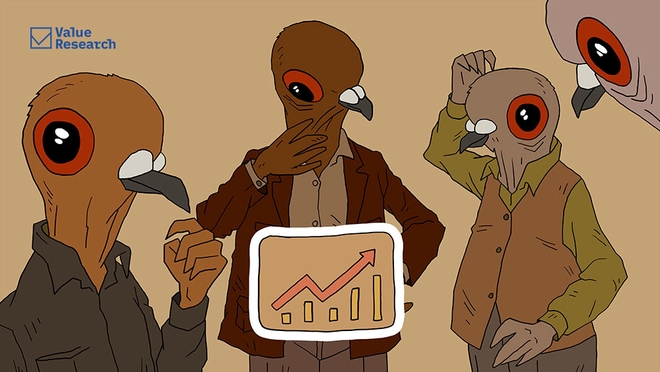
If even pigeons can develop superstitions in the face of random events, investors can surely do so, too. In 1948, the renowned behavioural scientist B.F. Skinner conducted a fascinating experiment with pigeons that, seventy-five years later, offers some insights into investor behaviour, at least to me. Instead of rewarding the birds for specific actions, Skinner randomly gave them food. The results were remarkable: six out of eight pigeons developed elaborate 'superstitious' behaviours, convinced their peculiar actions somehow triggered the food delivery.
One pigeon would spin counter-clockwise around its cage two or three times. Another repeatedly thrust its head into a corner of the cage. A third developed an odd tossing motion as if lifting an invisible bar with its head. Two others swung their heads from side to side in a pendulum motion. Each bird, in its way, had created a ritual it believed would bring rewards.
You're not alone if this reminds you of investor behaviour during market volatility. Like Skinner's pigeons, investors often develop their own 'rituals' and superstitions about what drives market success. Watch the financial news, and you'll see endless attempts to connect market movements to everything from election results to cricket matches. Monitor any investor discussion group, and you'll find elaborate theories about technical patterns, planetary alignments, or numerical sequences that supposedly predict market movements.
Suggested read: You are not irrational
The parallels are uncanny. Just as the pigeons performed their rituals regardless of whether they influenced food delivery, investors often cling to strategies without a real connection to market outcomes. A trader might convince themselves that the market always rallies on Tuesdays or that a particular technical pattern guarantees a price reversal. Another might believe that checking prices five times daily is somehow lucky.
The random reinforcement that created these behaviours in pigeons is precisely what makes the stock market such fertile ground for superstitious thinking. Sometimes, these "rituals" appear to work - just as the pigeons occasionally receive food right after performing their chosen action. When a particular analysis or trading strategy leads to a profitable trade, it reinforces the belief in that approach, even if the success was purely coincidental.
This phenomenon becomes particularly dangerous during bull markets when rising prices can make almost any strategy appear successful. Investors might attribute their gains to their morning meditation routine, their lucky trading shirt, or their complex chart patterns. The reality is that they're simply benefiting from a rising tide that's lifting all boats.
Suggested read: Clean-up time
The most insidious aspect of these market superstitions is how they can persist despite contrary evidence. Just as Skinner's pigeons continued their behaviours despite the random nature of the rewards, investors often double down on failed strategies, convinced that they just need to execute them more precisely or with greater conviction.
What's the antidote to this very human tendency? First, recognise that the market, like Skinner's food delivery system, operates largely independently of our personal rituals and beliefs. Second, embrace systematic, evidence-based approaches to investing. Regular SIP investments, proper asset allocation, and periodic rebalancing might not be as exciting as discovering the market's 'secret code,' but they've proven far more reliable.
Consider the recent market volatility following the state elections. Investors who attributed the subsequent rally to their particular analysis or trading strategy are like pigeons spinning in their cages - confusing correlation with causation. The market moves for countless reasons, many of which are only apparent in hindsight.
The most successful investors have freed themselves from such superstitious thinking. They understand that long-term investing success comes not from ritualistic behaviours or perfectly timing market movements but from maintaining discipline through market cycles, diversifying appropriately, and letting the power of compounding work its magic.
The greatest lesson from Skinner's pigeons is recognising our susceptibility to superstitious thinking. The next time you find yourself convinced that you've discovered a foolproof market pattern or a guaranteed trading strategy, remember those pigeons, earnestly performing their rituals for random rewards. Like Skinner's food dispenser, the market operates on its own schedule - regardless of how often we spin in our cages.
Also read: Pay less attention
Ask Value Research 
 New episodes every Friday










 New Process Alert
 Seems like you've uploaded a wrong QR code. Please upload the QR code downloaded from MF Central platform.


