 Widely read:


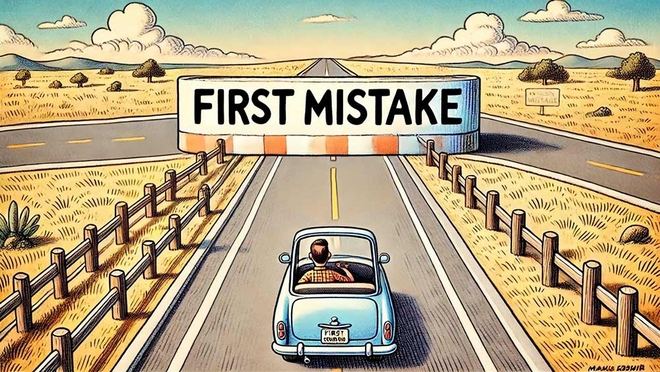 AI-generated image
If you've heard stories of Jhunjhunwala's legendary moves in the market, chances are Utpal Sheth was quietly pulling strings behind the scenes. But Sheth isn't just an investor; he's a walking encyclopedia of market wisdom. And at Value Research, we're all about bringing that kind of wisdom straight to your screen.
A little while ago, we talked about the importance of terminal value, as described by Utpal Sheth, in our article titled: How terminal value drives Utpal Sheth's investment philosophy.
Today, we're back for another round at the Sheth School of Investing. This time, though, we're talking about something trickier: mistakes. Not the kind that makes you shake your head and say, "Oops," but the kind that quietly robs you of wealth without you even realising it.
Sheth's take on mistakes
For most investors, the word 'mistake' translates to one thing: losses. But Sheth? He sees the world differently. According to him, mistakes are way more than red ink on your portfolio. Sometimes, the biggest hit to your wealth isn't losing money - it's missing out on making it.
And that's the thing: missed opportunities are sneaky. They don't slap you in the face like a bad investment does. Instead, they quietly fade into the background, unnoticed and unexamined.
Imagine you invested Rs 1 lakh in ABC Limited. Over the next five years, it gave you a 13 per cent annualised return. That's a decent Rs 84,000 profit. Not bad, right?
But wait - what if, during the same period, the Sensex compounded at 16 per cent annually (it has in the past five years)? That's Rs 26,000 extra you could've made just by parking your money in an index fund. No research. No sweat. Suddenly, that 'decent' return feels more like a missed opportunity, doesn't it?
This is exactly what Sheth calls losses in disguise. And trust us, there's a lot to unpack here.
The math of mistakes
Here's where it gets geeky. Sheth takes inspiration from statistics and applies it to investing mistakes. In stats, you've got Type 1 Errors (false positives) and Type 2 Errors (false negatives). Sheth adds a twist, introducing something he calls Type 1.5 Errors—or, as he puts it, Errors of Hesitation.
Buying mistakes
- Type 1 Error: Didn't buy what you should have bought.
- Type 1.5 Error: Didn't buy enough of what you should have bought.
- Type 2 Error: Bought what you should not have bought.
Think about it: When most of us look back at our investing blunders, we fixate on Type 2 Errors—buying bad stocks that tanked. But Sheth reminds us that Type 1 and 1.5 Errors - the ones where you hesitated or held back - can be just as costly.
Selling mistakes
- Type 1 Error: Didn't sell what you should have sold.
- Type 1.5 Error: Didn't sell enough of what you should have sold.
- Type 2 Error: Sold what you should not have sold.
Again, most investors obsess over Type 2 Errors, like selling a stock that later skyrockets. But how many of us reflect on the times we clung to a sinking stock or failed to trim a position before it went south?
Investors' takeaway
The beauty of Sheth's framework is that it's not just about pointing out mistakes - it's about helping you understand yourself as an investor. Once you start categorising your mistakes this way, patterns emerge. You start to see where you hold back, where you overcommit, and, most importantly, where you can improve.
And as Sheth would say, understanding yourself is the first step toward making fewer mistakes - and building more wealth.
If you're hungry for more of Sheth's investing wisdom, you're in luck. He dives even deeper into portfolio management mistakes in his full video - mistakes that even seasoned pros fall victim to. Plus, he shares some invaluable strategies for avoiding these pitfalls. Trust us, you don't want to miss it!
Also read: Valuable investing lessons from Jhunjhunwala's key man Utpal Sheth
This article was originally published on December 13, 2024.
Disclaimer: This content is for information only and should not be considered investment advice or a recommendation.
For grievances: [email protected]
Ask Value Research 
 New episodes every Friday













 New Process Alert
 Seems like you've uploaded a wrong QR code. Please upload the QR code downloaded from MF Central platform.


