 Widely read:


 AI-generated image


Last week, an internal presentation made at Nokia a few days after Steve Jobs launched the first iPhone leaked online. Much to everyone's (certainly mine) surprise, it turned out that Nokia's internal team was largely right about the massive existential threat that the iPhone posed to them. They weren't complacent, but somehow, that didn't help them.
There's something deeply satisfying about backing a champion when they're down. Whether in sports or business, watching a proven winner navigate through tough times and emerge stronger speaks to our fundamental understanding of resilience. It's a pattern we've seen play out countless times in the markets, yet one that investors often struggle to capitalise on.
The current market correction has presented us with precisely such an opportunity where several market leaders—companies that have demonstrated their mettle through multiple cycles—are trading at significant discounts to their historical valuations.
When genuine, market leadership is like a moat that gets deeper with time. These companies typically possess characteristics that become more entrenched with scale: robust distribution networks, strong brand recall, pricing power, and the financial muscle to weather downturns while continuing to invest in their businesses. When such companies face temporary setbacks, it creates a fascinating disconnect between their intrinsic strength and market valuation.
However, the challenge lies in distinguishing between a temporary setback and a fundamental deterioration. The most successful investors can look beyond the immediate turbulence and evaluate whether a company's competitive advantages remain intact. They understand that market corrections often create opportunities to acquire stakes in quality businesses at attractive valuations. But they're equally aware that not every fallen giant is destined to rise again.
What makes this particularly relevant now is the broader market context. We're seeing a more discerning market environment after remarkable gains, where many stocks traded at stretched valuations. This correction isn't merely about price declines but the market's reassessment of what constitutes value.
Yet, we must approach this opportunity with a healthy dose of scepticism. Market leadership can be surprisingly fragile, and what appears to be a temporary setback might be the first sign of structural decline. The business landscape is littered with once-mighty companies that never recovered their former glory. Nokia, Blackberry, and Kodak serve as cautionary tales, reminding us that technological disruption, changing consumer preferences, or management missteps can undermine even the strongest market positions.
Therefore, while the current market presents intriguing opportunities to invest in fallen market leaders, it demands rigorous analysis rather than blind faith in the power of leadership. We need to examine what made these companies leaders in the first place and whether those advantages remain relevant in today's rapidly evolving business environment. Sometimes, what looks like an attractive entry point might be the market's rational assessment of diminished prospects.
Our cover story this month delves into this fascinating aspect of investing. It explores how to identify and evaluate market leaders when they're down and, more importantly, how to distinguish between those poised for a comeback and those likely to disappoint.
This is one of the most valuable skills to develop for thoughtful investors: recognising and acting on opportunities when quality companies face temporary setbacks while maintaining the discipline to walk away when the evidence suggests otherwise. After all, in investing, sometimes the best opportunities come disguised as problems, but equally, sometimes issues are exactly what they appear to be.
Read our cover story: Rise of the fallen
Ask Value Research 

 New episodes every Friday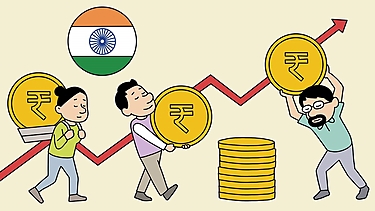









 New Process Alert
 Seems like you've uploaded a wrong QR code. Please upload the QR code downloaded from MF Central platform.


