 Widely read:


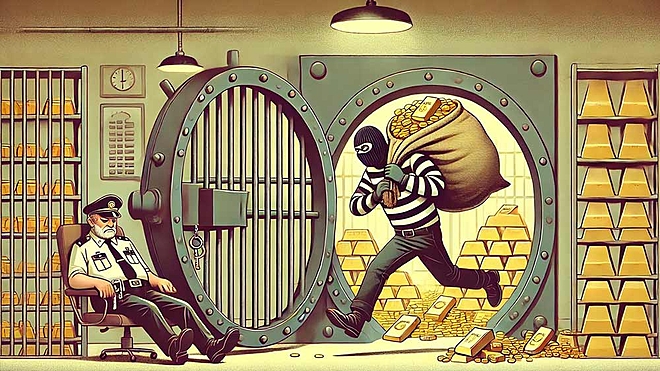 AI-generated image


This column is about gold. There's nothing new in that - I've written about gold as an investment many times in the past two decades. However, this column was triggered by a couple of things I didn't see coming. One, US banks and others holding physical gold at the Bank of England are facing delays in acquiring the gold. Two, the Fort Knox problem. What is the Fort Knox problem? Well, here's an explanation.
Over the past week, a remarkable drama has unfolded around Fort Knox, that legendary vault where the US government keeps its gold reserves. It started with Elon Musk wondering if anyone knew the gold was still there. This was quickly followed by Senator Rand Paul lamenting that he hasn't been allowed to visit Fort Knox in a decade and President Trump declaring that his administration would "go into Fort Knox to make sure the gold is there." The Treasury Secretary insists annual audits prove everything's fine, but critics point out these aren't comprehensive examinations of the 147 million troy ounces supposedly stored there.
Suggested read: A twist in the gold story
This might sound like another conspiracy theory, but it highlights something fundamental about gold that should concern investors. The fact that such doubts can exist about gold held in what is arguably the world's most secure facility tells us something about the nature of gold as an investment. If you can't be completely certain about gold in Fort Knox, what about the gold in your bank locker or the paper gold in your demat account?
The irony here is amusing. Gold is supposed to be the ultimate haven, the asset you turn to when you don't trust anything else. And yet, here we are, with questions about the safety and verifiability of gold itself. What's next? Will someone suggest an audit of the gold stored in Swiss banks? Or a thorough inventory of the Bank of England's vaults?
Suggested read: Are gold's golden years coming?
What makes this particularly interesting is that it comes at a time when gold prices are near historic highs. There's increasing talk of gold reasserting its role as a global, supranational currency. The Fort Knox episode adds another layer of complexity to Gold's already complicated story. It's as if the traditional arguments for and against gold as an investment have been scrambled, leaving investors more confused than ever.
And if you think Fort Knox is the only gold mystery out there, consider what happens in London's gold market every day. It turns out that much of the gold trading there involves "unallocated" gold - essentially paper promises backed by a general pool of gold rather than specific bars. It's a bit like going to a bank locker to store your family jewellery and being told, "Don't worry about which locker it's in, we've got lots of jewellery here, you'll get yours when you want it." This system works fine until too many people ask for their gold simultaneously, sending traders scrambling to find actual, physical gold to fulfil their promises. So much for the simplicity of investing in the world's oldest haven!
For the individual investor, though, this reinforces rather than weakens the case against gold as a significant investment. The Fort Knox controversy highlights what has always been gold's biggest problem: It's an asset that produces nothing, generates no income, and whose value depends entirely on what someone else will pay for it. In addition, there are new questions about verifiability and custody, and the investment case looks increasingly shaky.
I've long maintained that gold should play, at best, a minor role in an individual's investment portfolio. The past week's events, far from changing that view, have only strengthened it. When even governments can't easily verify their gold holdings, it's time for individual investors to focus on more productive assets that generate real value rather than just sitting in real or imaginary vaults.
Also read: How good is gold as an investment?
Ask Value Research 
 New episodes every Friday











 New Process Alert
  Seems like you've uploaded a wrong QR code. Please upload the QR code downloaded from MF Central platform.


