


 Adobe Stock

Yes, sell. I insist.
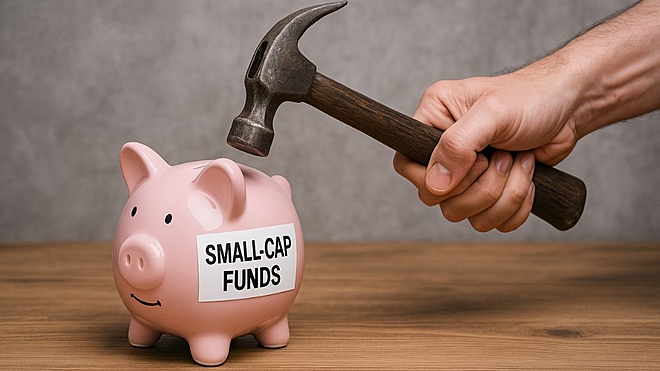
After all, small-cap funds have been a dumpster fire in recent months. The BSE SmallCap 250 index has been down over 18 per cent since September 2024.
Worse, the small-cap space is overvalued. Read this and this to learn what all fund managers are saying.
Therefore, sell your small-cap funds. Sell them, especially if you bought small-cap funds in the last few months, believing these funds will continue to go up, up and up. Sell them if you are scared. And sell them if you want to help me.
And why wouldn't you want to help me?
Why your exit helps me
When you sell your mutual fund before a certain period (varies between 15 days to 12 months), you don't just take your money and walk away.
You pay an exit load.
It's a small penalty for cashing out early.
And guess where that money goes? Not to the fund manager. Not to the AMC. It goes right back into the mutual fund.
What does the fund do with that extra cash? It buys more stocks. That's good for people who choose to stay invested.
People like me.
Because when markets dip, systematic investments scoop up more mutual fund units at lower prices. Over time, this lowers the average cost per unit and sets up long-term investors for higher gains when the market rebounds. Instead of fearing volatility, we embrace it as an opportunity to accumulate more.
So, if you want to sell your small-cap funds, go ahead. But let me tell you why it would be a mistake.
Small-cap funds need time
Investing in small-cap funds is never meant to be for the short term. Sounds odd, but small-cap funds are built for the long haul. (We say investors should hold on to their small-cap funds for at least seven years).
And this isn't the first time small-cap funds have taken a beating.
Let's rewind to 2008. The BSE SmallCap 250 index plummeted close to 70 per cent. But in 2009, they had not only recovered but soared to 135 per cent. Another example: In 2018, small caps dropped nearly 19 per cent. By 2021, they had surged to 63 per cent. The pattern repeats itself—sharp falls are often followed by even sharper recoveries.
Patience isn't just a virtue in investing; it's a necessity.
But there's another compelling reason to stick with small-cap funds.
Small-cap funds buy quality stocks
Investing in small-cap funds is significantly better than picking individual small-cap stocks. The odds are simply not in your favour—only 11 per cent of small-cap stocks ever grow into mid or large caps. Worse, 62 per cent actually deteriorate into micro-cap territory, generating a meagre 2 per cent annual return.
Even the worst-performing small-cap fund has delivered over 14 per cent annualised SIP return (for direct plans) over the last decade. Why such outperformance? Fund managers are selective. While there are 4,420 small-cap companies available, managers narrowed their focus to just 692 companies last year, with meaningful allocations to only 518.
Moreover, only 11 per cent of all small-cap companies qualify as 'high quality,' yet these companies represent 60 per cent of small-cap fund holdings according to January 2025 portfolio disclosures. Fund managers apply rigorous research rather than chasing market hype, providing a structured approach over directly picking small-cap stocks.
Final thought
If you find yourself anxious about every market correction, it might be worth reassessing whether investing in small caps aligns with your risk tolerance. The higher growth potential of small caps come with higher volatility. That's the trade-off.
So, if you don't have the patience for small caps, maybe they were never right for you in the first place. If you're still debating whether to exit your small-cap funds after this correction, I won't stand in your way. And if you decide to come back later? Well, chances are, you'll buy at a much higher price.
Now, I'll hold on to my funds while the market finds its footing again, which it always does.
Until then, thanks. I'll gladly take the extra units.
Also read: I invested Rs 3 lakh in small-cap funds last year. Big mistake?
This article was originally published on April 04, 2025.
Ask Value Research 

 New episodes every Friday




 New Process Alert
  Seems like you've uploaded a wrong QR code. Please upload the QR code downloaded from MF Central platform.


